


Program Mission
Program Mission is to produce professional, innovative and moral dermatology and venereology specialist graduates. In addition, developing research and community service activities in the field of dermatology and venereology by producing research outputs and community service activities.
Program Aims
The aim of this program is to provide the postgraduate student with the advanced medical knowledge and skills essential for the mastery of practice of Dermatology & Venereology and necessary for further training and practice in the field of Dermatology & Venereology through achieving:
1
Clinical skills.
2
Patient care skills.
3
Basic dermatology procedures such as; skin biopsy, laser, chemical peel, mesotherapy, cosmetic injections.
4
Able to perform high standard scientific medical research and publication in indexed medical journals.
5
Maintenance of learning abilities necessary for continuous medical education.
6
Ethical principles related to the practice in this highly sensitive specialty.
7
Active participation in community needs assessment and problems identification.
Program Information
Study System
Semesters
Graduate Awarded
Medical Doctorate (MD) in Dermatology & Venereology
Coordinator
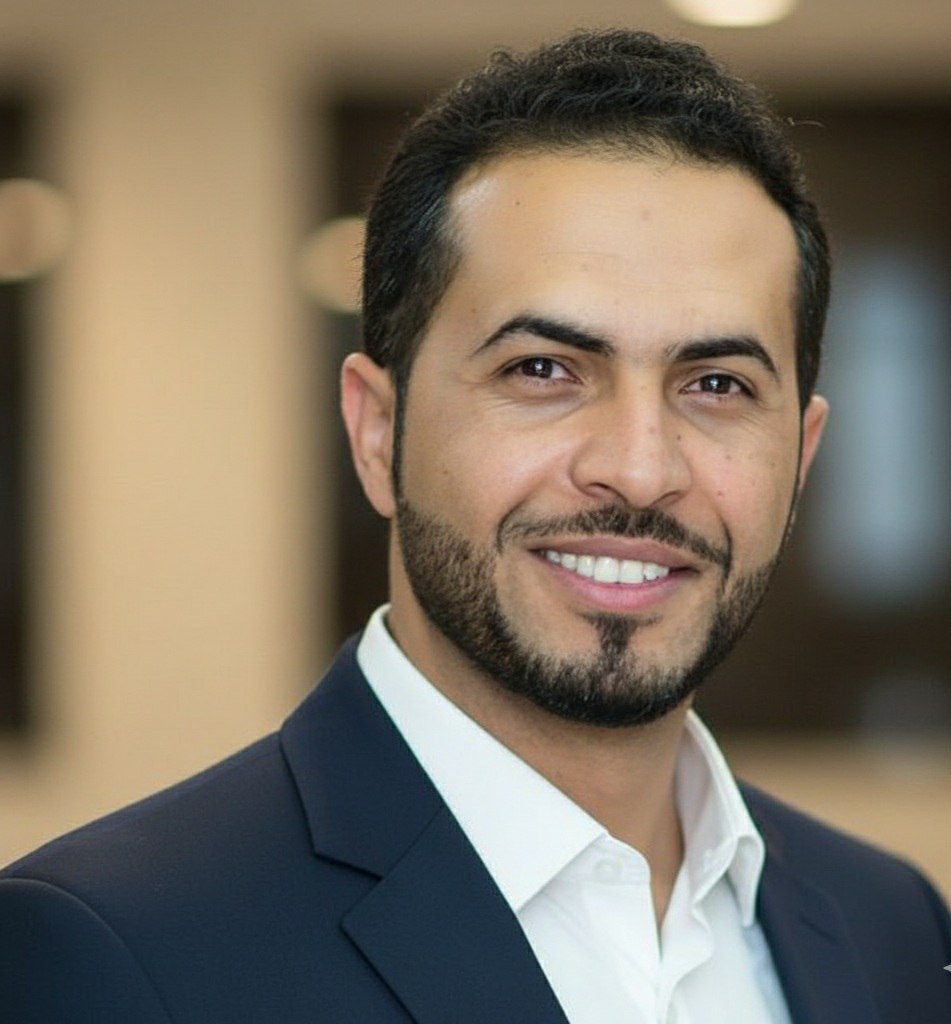
Mutaia Abuarij
Attributes of Graduates
Core Skills and Knowledge
- 1. Diagnosis and Treatment: Ability to diagnose and treat a wide range of skin, hair, nail, and mucosal diseases, including eczema, psoriasis, and infections.
- 2. Sexually Transmitted Diseases (STDs): Diagnosis and treatment of sexually transmitted infections and conditions related to the genital system.
- 3. Advanced Procedures: Mastery of advanced techniques and procedures such as laser therapy, microdermabrasion, and chemical peels.
Research Skills
- 1. Analytical Thinking: Ability to think critically and develop solutions to various medical problems.
- 2. Research and Publication: Conducting medical research, publishing in peer-reviewed journals, and actively participating in scientific research projects.
- 3. Continuous Learning: Staying updated with the latest developments and advancements in dermatology and venereology.
Practical Experience
- 1. Clinical Training: Gaining extensive experience in university hospitals to manage a wide range of cases, from simple to complex.
Personal Skills
- 1. Communication Skills: Ability to communicate effectively with patients and provide necessary medical advice.
- 2. Professionalism: Commitment to medical ethics and building a good reputation in the medical field.
Intended Learning Outcomes (ILOs)
Knowledge and Understanding (A)
Upon successful completion of the postgraduate MD in Dermatology and Venereology Program, the graduates will be able to:
- A1 Point out the normal structure and function of the human skin and on the macro and histological levels.
- A2 Mention the normal growth, abnormal structure, function, and development of human skin.
- A3 list recent advances in the common diagnostic and laboratory techniques necessary to establish diagnosis of dermatological, venereal diseases.
- A4 Understand the etiopathology of skin disease.
- A5 Enumerate methods of promoting health and preventing illness.
- A6 Describe the scientific methods of establishing disease causation.
- A7 Memorize common diagnostic and laboratory techniques necessary to establish diagnosis of various dermatological and venereal diseases.
- A8 List the various therapeutic methods /alternatives used for various dermatological and venereal diseases.
- A9 Understand the different type of laser and its application in various dermatology diseases.
- A10 Mention Cosmetic Injectables procedures and cosmetic peeling and its application in dermatology.
- A11 Mention the different side effect of various cosmetic procedures (laser, mesotherapy, chemical peeling, Cosmetic Injectables) and its managements.
- A12 Understand dermatopathology of common dermatological diseases.
- A13 Mention principles of evidence-based medicine, methodologies, tools and ethics of scientific research.
- A14 Mention the principles and fundamentals of ethics, quality assurance and legal aspects of professional practice in the field of Dermatology and Venereology.
- A15 Mention the effect of professional practice on the environment and the methods of environmental development and maintenance.
Intellectual Skills (B)
Upon successful completion of the postgraduate MD in Dermatology and Venereology Program, the graduates will be able to:
- B1 Integrate data acquired through history taking to reach a provisional diagnosis for various Dermatological, Venereal and Andrological problems.
- B2 provides extensive level of patient care for patients with all common diagnoses and for uncomplicated procedures related to Dermatology, Venereology.
- B3 Gather essential and accurate information about patients of the Dermatology & Venereology related conditions.
- B4 Conduct scientific research studies that add to knowledge in the area of Dermatology and Venereology.
- B5 Plan to improve performance in the field of Dermatology and Venereology.
- B6 Identify Dermatological and Venereal problems and find solutions.
- B7 Mange Scientific discussion based on scientific evidences and proofs.
- B8 Interpret data acquired through researches using different statistical tests.
- B9 Identify and collect data variables impacting health and disease in the field of Dermatology, Venereology.
- B10 Describe the theoretically type of hair transplant procedures and its complications.
Professional and Practical Skills (C)
Upon successful completion of the postgraduate MD in Dermatology and Venereology Program, the graduates will be able to:
- C1 Perform physical examination of patients.
- C2 Write and evaluate of medical reports.
- C3 Evaluate and develop methods and tools existing in the area of Dermatology and Venereology and andrology.
- C4 Perform advanced diagnostic and therapeutic procedures in this practice with perfection of basic procedures such as (skin biopsy ((shave, punch, excisional and incisional), mesotherapy, injectable cosmetic, electrocautery, phototherapy, laser etc.……).
- C5 Preform simple dermatosurgery procedures (lipoma removal, epidermal nevus removal, epidermal cyst removal).
- C6 Master the basic and modern professional skills in conducting researches in the field of Dermatology& Venereology.
- C7 Preform skin scraping test, culture swabs, and skin patch test, skin prick test and understand its indications.
- C8 Use recent advanced technological methods in collection, analysis and interpretation of data and in management of prevalent problems in the field of Dermatology.
- C9 Handles unexpected complications, while demonstrating compassion and sensitivity to patient needs and concerns.
- C10 Perform diagnostic and therapeutic procedures considered essential in the field of Dermatology, Venereology.
General Skills (D)
Upon successful completion of the postgraduate MD in Dermatology and Venereology Program, the graduates will be able to:
- D1 Present reports in seminars effectively.
- D2 Use standard computer programs effectively.
- D3 Teach others and evaluate their performance.
- D4 Assess himself and identify his personal learning needs.
- D5 Use different sources for information and knowledge.
- D6 Work coherently and successfully as a part of a team and team’s leadership.
- D7 Mange scientific meetings according to the available time.
- D8 Communicate effectively and demonstrate caring and respectful behaviors when interacting with patients and their families in Dermatology &Venereology) related situations.
